


Disney FAMA, or Facility and Merchandise Authorization, is a key aspect of doing business with The Walt Disney Company. It is a formal authorization that allows a manufacturing facility or supplier to produce and supply merchandise bearing the Disney brand.
It helps Disney better control and understand its supply chain, allowing them to trace the origin of products and ensure that they are produced in an ethical and sustainable manner.
Authorized facilities are required to ensure that the manufacturing process adheres to various legal and ethical standards, including labor laws, environmental regulations, and product safety requirements. This not only protects the rights and well-being of workers involved in production, but also ensures that the final product is safe for consumers.
It provides a framework to ensure that products associated with the Disney brand are produced to the highest standards, protecting the brand image, consumers and workers involved in the supply chain.
As a Disney FAMA certified supplier, our factory is considered as trusty manufacturer, and we are authorised to manufacture the shopping bags that with Disney design.
The Business Supply Chain Initiative (BSCI) is an organization that sets and promotes standards for social responsibility in business.
It is focused on international conventions for workers' rights, and businesses that take part in BSCI.
The BSCI promotes ethical and sustainable business practices by providing a common code of conduct and a framework for auditing and monitoring suppliers' compliance with social and labor standards.
It ensured that the products source are produced under fair and decent working conditions, protecting the rights and welfare of workers.
Below are the emphasis of BSCI:
● The rights to freedom of association and collective bargaining
● No discrimination
● Fair remuneration
● Decent working hours
● Occupational health and safety
● No child labor
● Protection of young workers
● No precarious employment
● No bonded labor
● Protection of the environment
● Ethical business behavior
We are the proud holder of BSCI from the year 2017. As a responsible factory, we are always comply with BSCI standards, demonstrate our commitment to ethical and sustainable business practices, protect our empolyees' right and working environment.
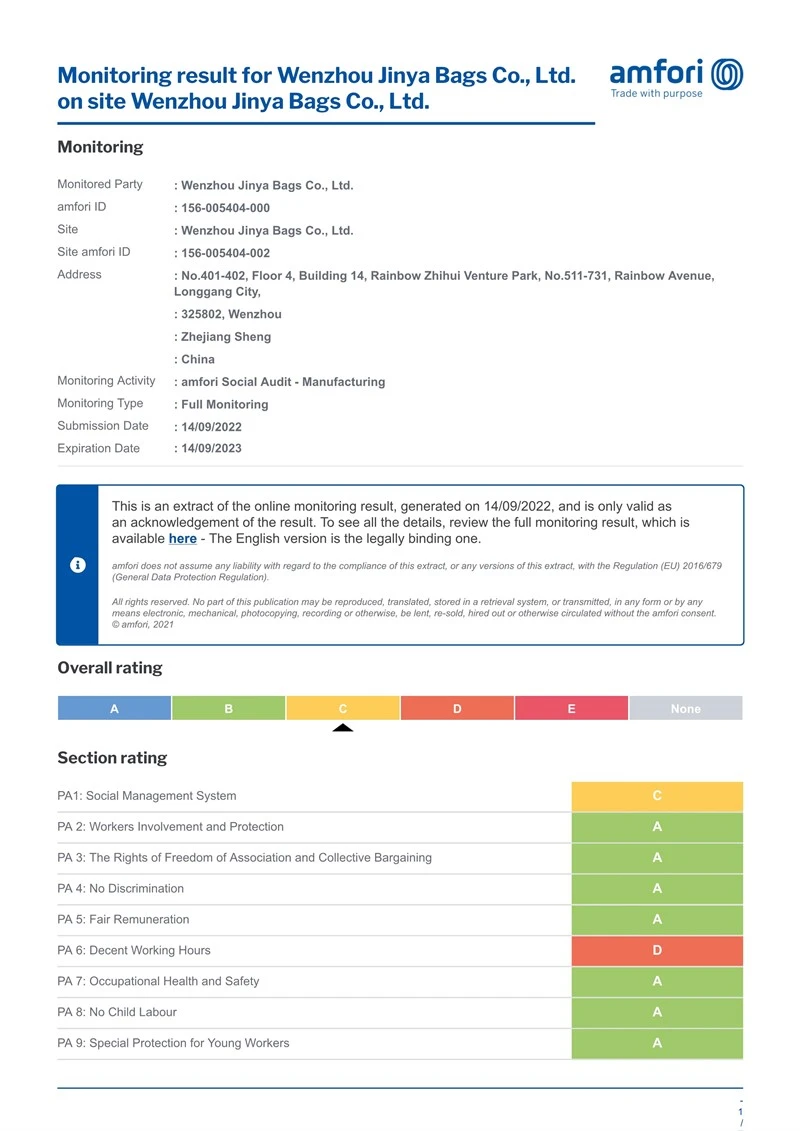
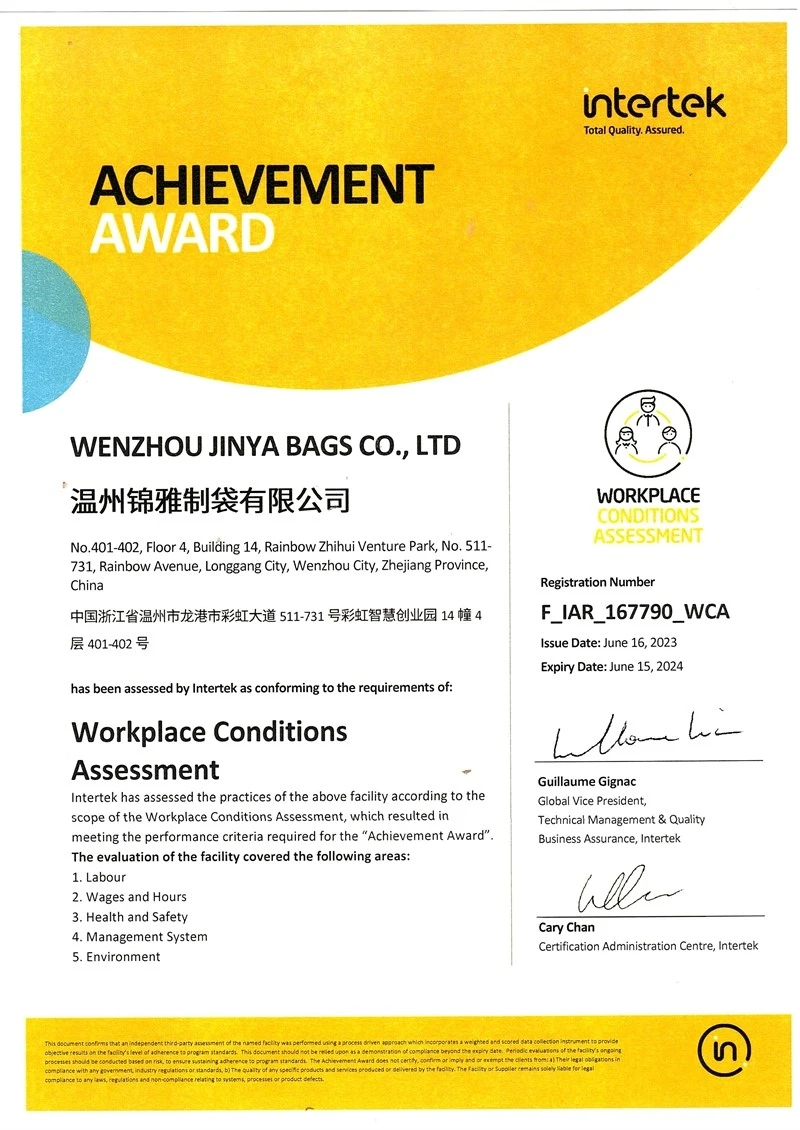
WCA is called"Workplace Conditions Assessment", which is simliar to BSCI, but more strict than that and has highly admitted in USA.
In terms of social and labor conditions, WCA looks at factors such as fair wages, reasonable working hours, prevention of child and forced labor, and provision of a safe, non-discriminatory work environment.
Health and safety is another important aspect. The WCA investigates whether the company has implemented appropriate safety measures such as fire safety equipment, well-maintained machines, and employee safety training. This is essential to preventing workplace accidents and injuries.
Environmental considerations are also an integral part of the WCA. This includes assessing a company's waste management practices, energy consumption, and efforts to reduce pollution and ecological impact. This may involve assessing a company's ethical behavior, compliance with legal and regulatory requirements, and transparency of operations. A company's supply chain may be examined to ensure there are no unethical practices.
The WCA process goes beyond identifying problems to provide practical solutions and guidance for improvement. It helps companies develop and implement effective policies and procedures to address any deficiencies found. This proactive approach not only reduces risk but also improves a company's reputation and competitiveness in the market.
We are the holder of WCA audit from the year 2023, and will continue the audit in the future.We adhere to certain ethical and social standards regarding labor practices, human rights, working conditions, and environmental protection.
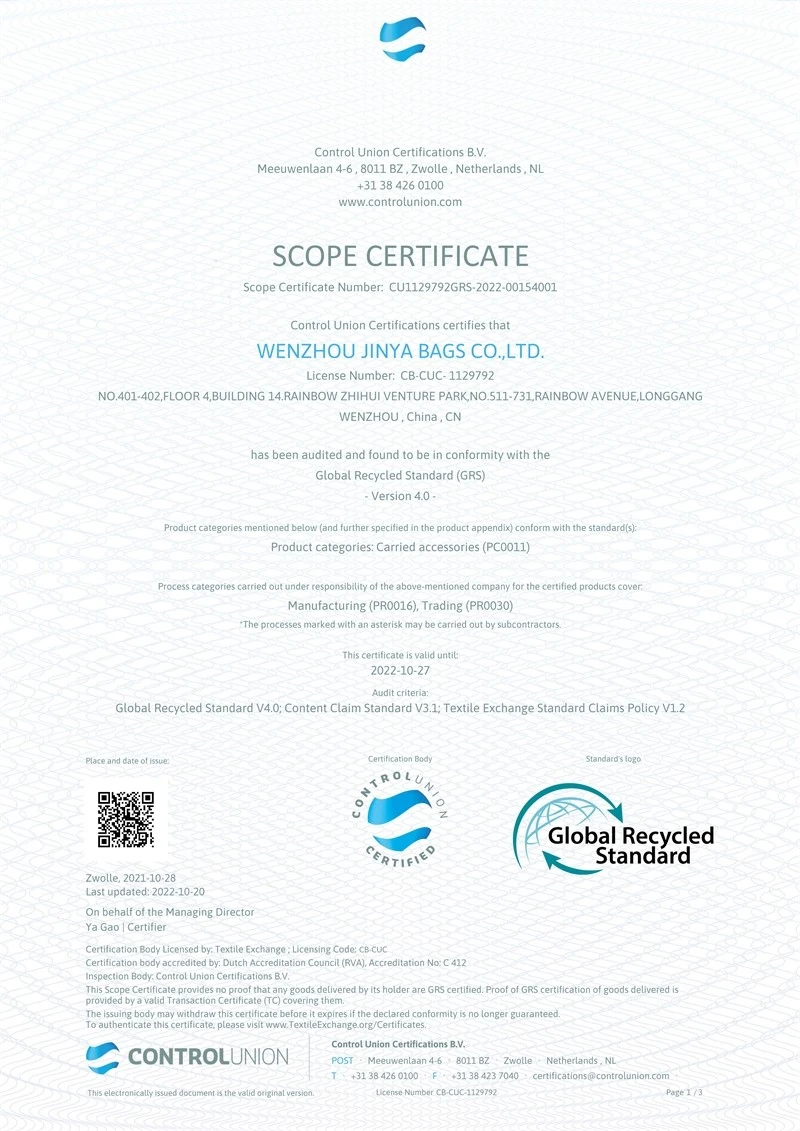
The Global Recycled Standard (GRS) is an international, voluntary, full-product standard that specifies third-party certification requirements for recycled materials, chain of custody, social and environmental practices, and chemical restrictions in products.
The main purpose of the GRS is to increase the use of recycled materials in the production of goods and to provide a transparent and consistent framework to verify and communicate the recycled content of products. This helps promote a circular economy and reduce the environmental impact of the production process.
The GRS certification process involves several key elements:
Recycled content: The standard defines different levels of recycled content, such as post-consumer and pre-consumer recycled materials.
Chain of custody: This ensures that recycled materials can be traced throughout the supply chain, from source to final product.
Social and environmental practices: Factories and facilities involved in production must adhere to certain labor and environmental standards, such as fair wages, safe working conditions, and minimal environmental pollution.
Chemical restrictions: The use of certain hazardous chemicals is restricted to ensure the safety and sustainability of the final product.
The Global Recycled Standard plays an important role in promoting the use of recycled materials, increasing supply chain transparency, and driving positive social and environmental changes in the manufacturing industry.
We are engaging in the use of Recycled materials in our products and reduce or eliminate the harm caused by its production.

GSV, which stands for Global Security Verification. The core goal of GSV is to improve security standards within the supply chain, thereby protecting global trade from terrorist activities.
GSV is a certification-based security program that covers various entities such as importers, carriers, consolidators, licensed customs brokers, and manufacturers. The program has been widely recognized as a standard by international customers and retail stores. In the current global business environment, the demand for enhanced security measures in the supply chain is increasing.
GSV plays a vital role in strengthening global supply chain security. It responds to the growing concerns of brands and international buyers while motivating factories to adopt best practices and continuously enhance their security systems. Such collective efforts help create a safer, more secure trading environment, contribute to the smooth functioning of the global economy and the protection of businesses and consumers.
We are the holder of GSV from the year 2018, we will continue to engage in the security of trade, the prevention of terrorist attacks, and the combat of illegal trafficking.